

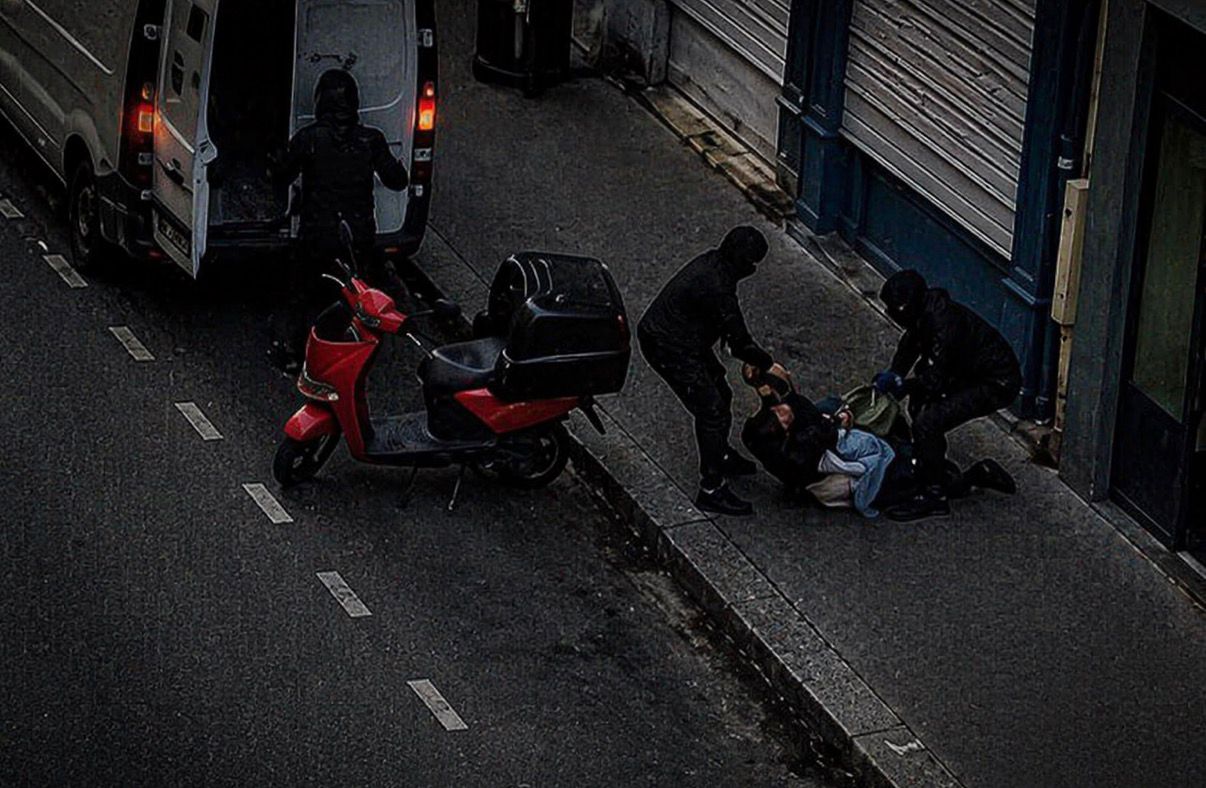


For several years, attacks on cryptocurrency holders were perceived as isolated events, often spectacular, but still marginal in their frequency and understanding. This reading is no longer in line with the developments observed since the beginning of 2026.
Beyond the increase in the number of cases, it is the very nature of these attacks that is changing. Targeted profiles are diversifying, operating methods are adapting, and the logic of constraints is becoming more direct. This phenomenon, which is still partially underestimated, is now part of a wider dynamic that calls for a renewed reading of risk.
(Reading time: 3 minutes)
An acceleration that goes beyond the simple effect of volume
Data relayed by several national media, in particular RTL and Le Parisien, report more than 40 kidnappings or kidnappings in connection with cryptocurrencies since the beginning of 2026. Reported at the operational level, this volume corresponds to one act every 2 to 3 days.
While this figure represents a significant increase, it is not in itself the most structuring element. What is more interesting is the regularity of these events and their chronological nature. The repetition of cases tends to change the perception of the phenomenon, which can no longer be considered punctual.
Operating methods in recomposition
An analysis of recent cases reveals a gradual evolution of operating methods, marked by the coexistence of contrasting situations.
Some attacks have an advanced level of preparation, based on relatively structured intelligence, targeting, and execution phases. These cases, which have been extensively documented by the press, in particular Le Monde, reflect an ability to identify usable profiles and to act in a short period of time.
Conversely, several attempts reveal more limited levels of preparation. Execution errors, organizational faults or even approximate targeting have, in some cases, led to failures. These situations testify to the emergence of opportunistic profiles, seeking to reproduce these attacks without fully controlling their mechanisms.
This duality contributes to complicating the reading of the threat, by introducing an additional level of unpredictability.
A logic of constraint that has become central
The developments observed in recent years indicate a shift in the objective pursued during these attacks.
The abduction of David Balland, co-founder of Ledger, in 2025, widely reported by the national press, marked a tipping point in understanding this dynamic. The use of violence as a lever to speed up a ransom demand has highlighted a logic of direct coercion.
More recent cases confirm this evolution, with Kidnappings in the middle of the day, in particular that of a father of an entrepreneur in the middle of Paris, attacks in open environments and pressures exerted on those around the targets. These elements reflect a search for immediate efficiency, in which the constraint makes it possible to reduce execution times.
A gradual broadening of the risk perimeter
At the same time, the concept of target is tending to broaden.
Attacks are no longer exclusively aimed at direct holders of digital assets. In several documented cases, relatives were targeted in the absence of the main person, in order to exert indirect pressure. These situations illustrate an extension of the perimeter of vulnerability, which is no longer limited to the individual, but now includes his environment.
This shift involves a more comprehensive approach to security, integrating not only the person, but also their living environment and interactions.
A mainly reactive intervention framework
In the majority of cases, the persons concerned did not benefit from specific protective devices before the events occurred.
The interventions of the police are part of a reactive framework, focused on investigation and arrest. Several operations, relayed by the press reuters, made it possible to release victims and dismantle networks, illustrating the effectiveness of these devices once the event occurred.
However, between the moment when a person becomes a target and when the authorities intervene, there is a phase during which they are not effectively protected. Its security is then based on its discretion or on limited devices, which are often insufficient in the face of a targeted attack.
The limits of technical approaches in the face of human constraints
In some situations, technical security devices were present, in particular alarm or video surveillance systems.
These tools make it possible to detect or record an event, but do not constitute an interposition capacity. Faced with operating methods based on direct constraints, their effectiveness remains partial.
This limitation highlights the need to evolve security systems towards approaches that fully integrate the human dimension, in particular through the deployment of close protection agents. In contexts where the threat is based on direct coercion, speed of execution and the exploitation of individuals, human presence no longer complements existing systems, but becomes a central element of the protection system. It alone makes it possible to introduce the ability to anticipate, adapt and, where appropriate, interpose in situations where technical means reach their limits.
Towards a more integrated approach to protection
In this context, the protection of exposed persons tends to be part of a more global approach, combining analysis, forecasting and intervention capacity.
It is in this logic that the interventions carried out by specialized actors such as DGDM Protection are part of this logic, which revolve their actions around audit and advisory missions and, when necessary, close protection systems.
These devices are based on a human presence, capable of ensuring continuity in protection, both upstream and in response to an identified threat.
CONCLUSION
The developments observed in France since the beginning of 2026 reflect a gradual but significant transformation of an initially marginal threat.
The increase in the number of cases, the diversification of the profiles involved and the adaptation of operating methods contribute to redefining the contours of risk for certain categories of the population.
In this context, the question is no longer limited to the identification of obvious targets, but extends to the understanding of the mechanisms that make an environment exploitable.
DGDM PROTECTION
As these dynamics take hold, the question of protection is no longer a question of a specific response to an identified risk.
It is part of a more global approach, in which foresight, the structuring of environments and human presence are decisive elements.
In a context where the threat is characterized by its speed, its ability to adapt and its use of direct coercion, the establishment of a coherent operational system becomes a key factor in reducing exposure.
It is in this continuity that the approach developed by DGDM PROTECTION is part of, at the crossroads of human, operational and strategic challenges.
.svg)