


In a previous article, we talked about how safety was actually becoming a performance driver in the French nuclear industry.
Recent developments extend and broaden this analysis.
The revival of nuclear power in France is no longer based solely on industrial or technological trade-offs. It is now part of an environment marked by a deterioration of the international strategic context, growing tensions between powers and increased exposure of critical infrastructures.
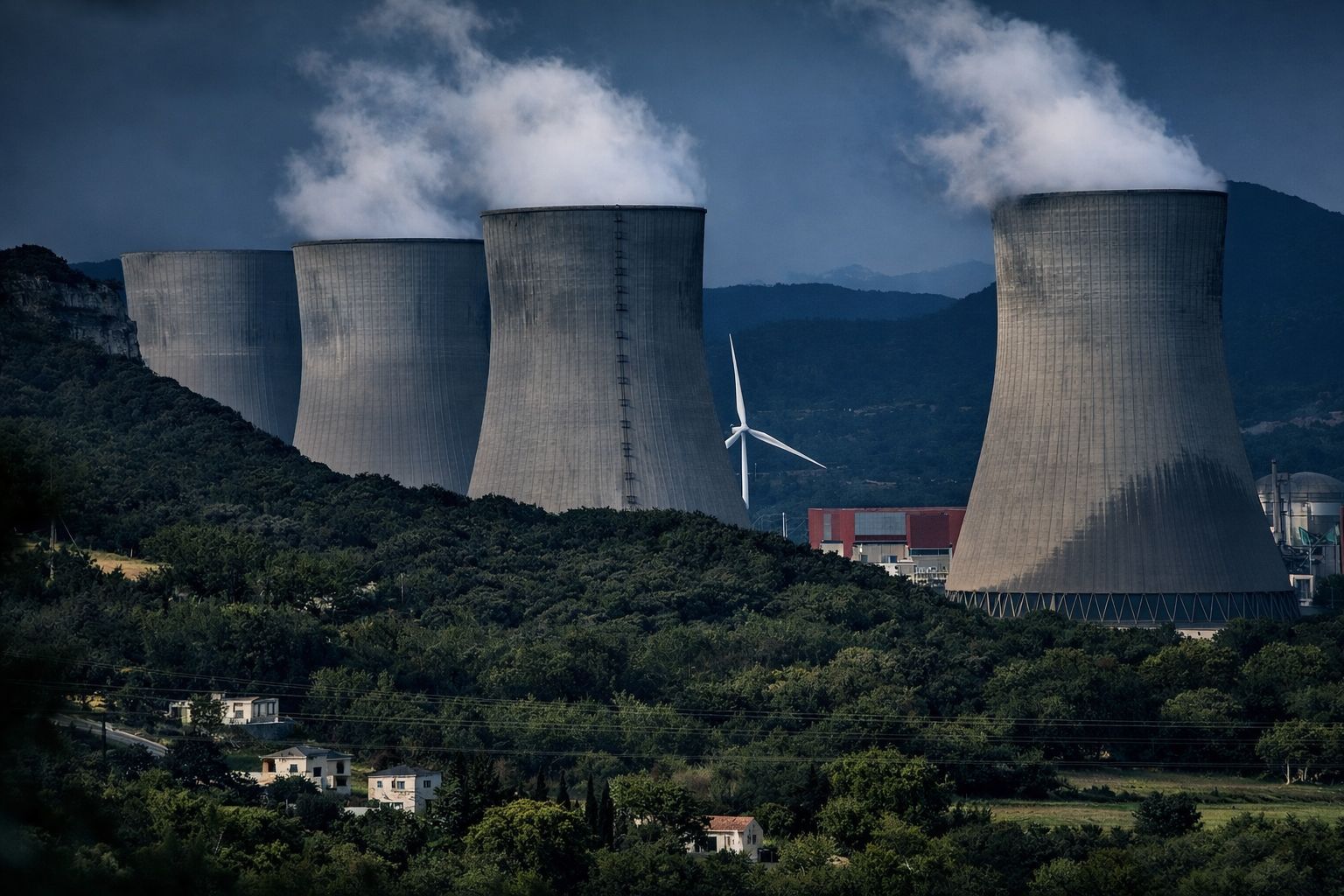
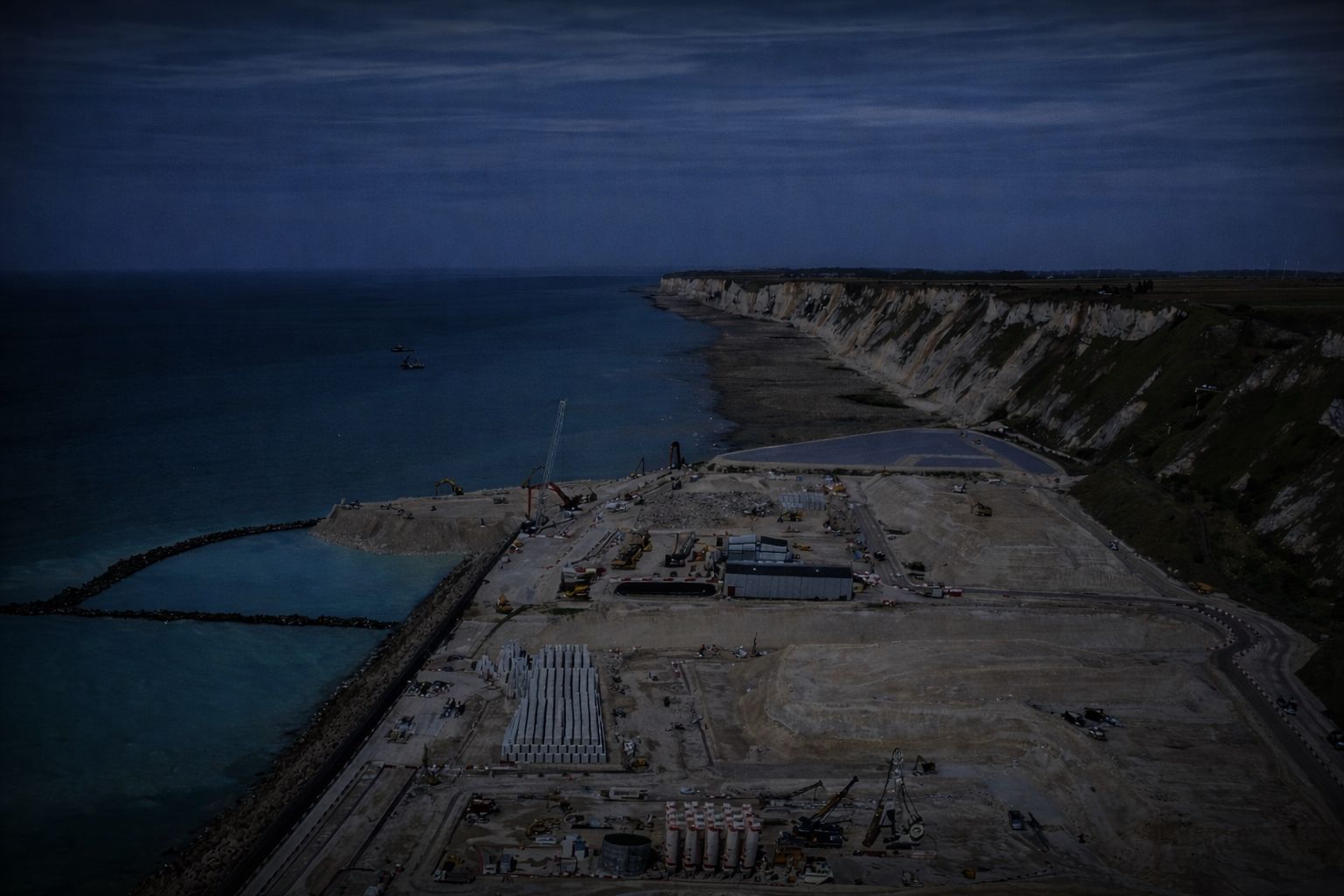
The adjustments requested on the EPR2 reactor projects, in particular in Penly (Seine-Maritime) and Gravelines (Nord), as well as the alerts issued by the French military authorities, bear witness to this evolution.
In this context, nuclear power can no longer be understood from a strictly industrial or energy perspective. It is at the crossroads of technical, security and strategic issues, the intertwining of which redefines the conditions for the development and operation of infrastructures.
A strategic climate that is deteriorating around nuclear power
The Chief of Staff of the French Armed Forces recently referred to a “worrying atmosphere” around nuclear power, in a context of gradual deterioration of the international strategic climate, as reported by the national press, in particular South West.
Since the start of the war in Ukraine, the nuclear issue has continuously returned to the heart of international balances. Russia has, on several occasions, highlighted its nuclear capabilities in its political and military communications, contributing to the strengthening of a climate of lasting tension in Europe, a development that has been widely documented by media such as Le Monde.
The conflict has also exposed sensitive infrastructures to severe situations. The Zaporizhia nuclear power plant, located in Ukraine, found itself at the heart of an area of military operations, illustrating the potential vulnerability of civilian nuclear installations in a context of active conflict.
In this context, several analyses converge to highlight the gradual weakening of regulatory mechanisms inherited from the post-Cold War period, in an environment where nuclear balances appear to be less stabilized.
The Iranian Nuclear Program and Tensions in the Middle East
In addition to these tensions in Europe, there is a second source of instability, in the Middle East, where the Iranian nuclear program continues to focus international concerns.
The technical advances made in recent years by Iran in the area of uranium enrichment, combined with an uncertain diplomatic negotiations, maintain a climate of lasting tension, a subject regularly monitored by the international and European press, in particular Le Monde.
At the same time, several incidents highlighted an evolution of threats in the region. Strategic energy infrastructures have been targeted by attacks combining drones and missiles, increasing the ability to reach critical sites with rapid and difficult means to anticipate.
These events, which are widely documented in the economic and international press, are often analyzed as revealing a transformation in the modes of conflict. They show that infrastructures essential to the energy functioning of a country can be exposed to targeted actions, in a very short period of time.
While not directly targeting civilian nuclear facilities, these episodes contribute to broadening the spectrum of risks associated with critical infrastructure as a whole.
EDF, EPR2 and the revival of nuclear power in France: a sector under constraint
In this tense international context, the nuclear situation in France highlights the industrial challenges that the sector faces.
As Reported in Particular L'Usine Nouvelle, the group EDF Was required to review certain design elements of the EPR2 reactors, as part of the nuclear projects in Penly (Seine-Maritime) and Gravelines (North).
Two separate opinions issued in early February by the Nuclear Safety and Radiation Protection Authority (ASNR) and by the Environmental Authority identified shortcomings, particularly in the civil engineering design of these new generation nuclear reactors.
These adjustments come at a time when France has initiated a revival of nuclear power, presented as a structuring element of energy sovereignty.
They also illustrate the particularly high level of requirements to which these projects are subject, in an environment where technical, regulatory and industrial constraints are closely intertwined.
Critical infrastructures, OIV and nuclear safety: a growing exposure
All of these developments take place in an environment where critical infrastructures occupy a central place in the functioning of States.
In France and Europe, nuclear power plants, energy networks and major industrial sites are structuring elements of energy and economic sovereignty. The framework for operators of vital importance (OIV) and points of vital importance (PIV) frames their protection, with obligations aimed at guaranteeing the continuity of essential activities.
However, several recent analyses and feedback highlight a rapid evolution of this environment.
Conflicts in the Middle East have shown that energy installations can be targeted in a precise and coordinated manner, with immediate effects on production and supply. These developments are regularly interpreted as indicative of a change in risks, characterized by more diffuse, faster and sometimes asymmetric threats.
In this context, the security of nuclear and energy infrastructures tends to be part of a broader framework, at the crossroads of industrial, energy and security challenges.
CONCLUSION
Recent developments at the international and national levels highlight a convergence of factors.
Tensions between powers, illustrated in particular by Russia's position in Europe and the uncertainties surrounding the Iranian nuclear program, contribute to putting nuclear power back at the center of strategic balances. At the same time, recent conflicts have shown the ability to reach strategic energy infrastructures in a short time and with limited resources.
In France, the adjustments requested from EDF On the Penly and Gravelines EPR2 projects, following the opinions issued by the safety authorities, illustrate the technical and organizational constraints that accompany the revival of nuclear power.
In this context, the words of the Chief of Staff of the Armed Forces, referring to a “worrying atmosphere”, are part of an environment where sensitive infrastructures face a combination of industrial constraints and changes in the strategic context.
Taken together, these elements describe an environment in which French nuclear infrastructures must be part of both demanding industrial logics and in a context of growing international tensions.
.svg)