
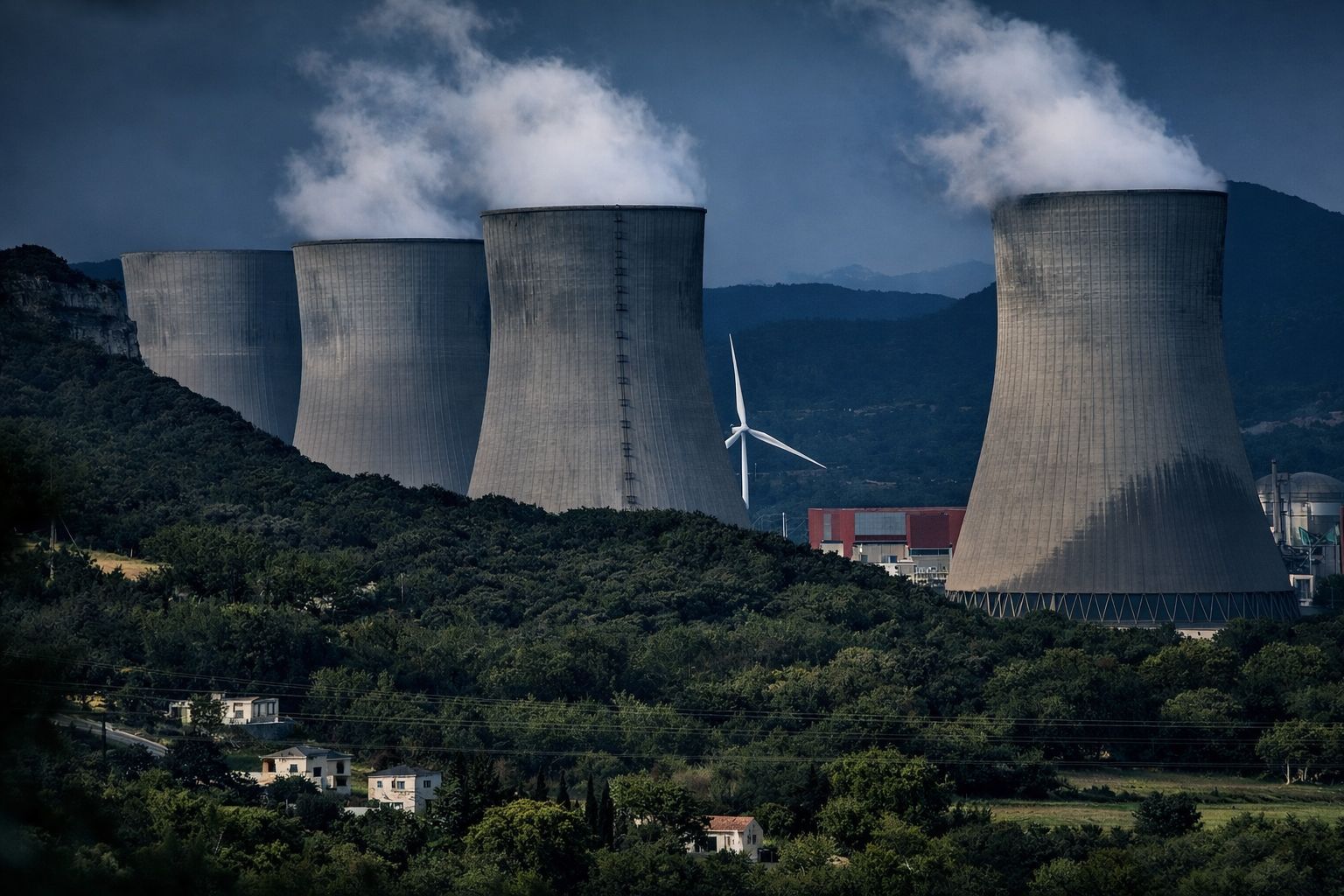


The revival of nuclear power in France is not based solely on industrial or technological trade-offs. It is now part of a wider dynamic, where the control of safety and security issues appears to be an essential condition for the performance of installations. This evolution marks a major turning point for the nuclear industry, but also for safety and security players, who are called upon to play a more strategic role in the years to come.
A new reading of safety: from constraint to performance condition
Long perceived as a binding normative framework, sometimes opposed to industrial imperatives, safety is now emerging as a determining factor in the overall performance of nuclear installations. The availability of reactors, operational continuity, the control of scheduled or unscheduled shutdowns, as well as the reliability of operations rely on a robust, anticipated and structured risk organization.
This evolution reflects a more mature approach to the subject: safety is no longer considered as an obstacle to industrial operation, but as an indispensable basis for its sustainability. By integrating safety and security issues early on in projects, the nuclear industry gives itself the means to secure its industrial objectives while strengthening the trust of public authorities, partners and the public.
A structuring signal sent to the industrial ecosystem
This change in posture goes beyond the regulatory field alone. It sends a clear message to the entire industrial ecosystem: the revival of nuclear power is part of a logic of global risk management, where the human, organizational and technical dimensions must be thought out in a coherent and integrated manner.
In this context, safety and security requirements are no longer limited to a logic of minimum compliance. They involve a detailed analysis of vulnerabilities, a rigorous structuring of devices and an ability to manage security over time. The expected performance of installations cannot be separated from the performance of the protective devices that surround them.
OIV and PIV: a gradual recomposition of expectations
Nuclear installations, as critical infrastructures, are fully within the scope of operators and points of vital importance (OIV/PIV). These environments, which have historically been highly supervised and sometimes not very open, are now experiencing a gradual evolution of their expectations in terms of safety and security.
Where certain areas were previously reserved for historical actors or very compartmentalized models, a more integrated approach to global security opens up new perspectives. Operators now expect partners capable of intervening throughout the value chain: audit, device engineering, organization of human resources, integration of technical solutions and operational management.
For safety and security companies able to demonstrate a genuine risk culture, control of sensitive environments and the ability to evolve within demanding regulatory frameworks, access to these perimeters becomes more readable and more structured.
An economic and strategic opportunity for the security/safety sector
This dynamic is a major opportunity for the private security and safety sector. It favors the emergence of actors capable of positioning themselves no longer only as operational service providers, but as real performance partners.
Companies that know how to structure their audit and consulting procedures, offer integrated technical devices (video protection, access control, detection, supervision) and support deployment and operational management over the long term will be able to make a lasting contribution to projects related to critical infrastructures. Beyond the economic challenge, this evolution also contributes to a broader objective of resilience and industrial sovereignty.
Towards a renewed governance of critical infrastructure security
The increasing demands observed in nuclear environments and more generally within critical infrastructures also raises the question of security governance. While the State remains the guarantor of the fundamental interests of the Nation, the operational security of OIV and PIV sites is increasingly based on hybrid devices, combining public requirements and specialized private capacities.
In this context, security and safety can no longer be thought of as fixed or exclusively state responses. They must rely on actors capable of designing, deploying and managing comprehensive systems, adapted to contemporary threats, including those that were not fully taken into account in the past. The proliferation of drones, the evolution of malicious operating methods or even the increasing interconnection of systems require a global, anticipated and evolving approach to the protection of sensitive infrastructures.
DGDM, a global security player at the service of sensitive sites
The DGDM group is fully committed to this dynamic. Specializing in the security and safety of sensitive environments, the group supports critical infrastructure operators through a structured approach, ranging from audit and vulnerability analysis to the deployment and operational management of devices.
Through its various entities, DGDM integrates human, organizational and technological dimensions in order to offer solutions adapted to the specific challenges of OIV and PIV sites. The division DGDM Defense System illustrates this ability to respond to emerging threats through advanced devices, particularly in the field of anti-drone combat and the reinforced protection of sensitive areas. These capabilities make it possible to deal with vulnerabilities identified in the past and to strengthen the resilience of installations in the face of increasingly complex scenarios.
By relying on clear governance, an assumed risk culture and proven operational expertise, the DGDM group contributes to the evolution of private security standards. Its role is not to replace State security, but to offer operators of critical infrastructures concrete means to strengthen their security autonomy, improve business continuity and sustainably support the revival of strategic sectors such as nuclear power.
.svg)